A comprehensive geriatric assessment looks at the whole older person, not one complaint: the history with a caregiver's view added, daily function, the extra review-of-systems questions, thinking and mood, and gait. Each part is below in the order you do it, with what to ask and what to listen for. No course notes cover this yet; built from the Clinical Skills objectives and student notes. Anything beyond the objectives is tagged extra, and where an objective has no source behind it (the older-adult gait method, the GDS depression scale, the problem list), the page says so.
Pick a region below to jump to it.
The history with the caregiver → Daily function (ADLs, IADLs) → Review of systems → Thinking and mood → Gait → Problem list and plan
Patient-centred: the older adult's own story and goals come first, and a caregiver adds a second view, with the patient's permission. Always think of delirium, depression and dementia.
General approach
Every geriatric assessment
The general approach
Say it first (TOSCE, Teaching Objective Structured Clinical Exam): "Hello, my name is [name], I'm a medical student working with Dr. [X]. I'd like to hear how things have been for you. Is it okay if I ask you some questions, and if [caregiver] adds what they have noticed?"
Perform a comprehensive geriatric assessment using a patient-centred approach, then develop a preliminary problem list and management plan (section 7)
Collateral history: a history from someone else who knows the patient (a spouse, child or other caregiver). Obtain a history from the older adult and their caregiver. Ask the patient's permission first, and let the patient speak before the caregiver adds
Make it easy for the patient: speak clearly and slowly, check they can hear and see you, and allow time
Always consider psychiatric causes of change: delirium, depression and MCI or dementia
Present the case to peers and faculty in a clear, concise way using the framework you are given, reflect on the encounter using the group's feedback, and give peers constructive feedback, communicating and cooperating with them respectfully
The history, with the caregiver
CS2 · Geriatrics · 6 areas to ask about
Start here
What to say
The same spine as the Patient-Centred Interview (identification, presenting concern, past, medications, family, social), with the older adult's extra questions below
The story
Presenting concern
Why they came, in their words
Ask or do
"What has been bothering you?" to the patient first
Then ask the caregiver: "What have you noticed?"
Ask what matters most to them
Listen or look for
Where the patient's and the caregiver's accounts differ
Collateral from the caregiver
What the patient may not notice or say
Ask or do
Ask the patient: "Is it all right if I also speak with [caregiver]?"
Ask the caregiver about memory, behaviour and coping
Ask how the caregiver is managing themselves
Listen or look for
Changes the patient has not mentioned · caregiver strain
Safety and medicines
Falls and near-falls
Risk of injury
Ask or do
"Have you fallen? Any near-falls?"
Ask what happened just before
Ask about medicines and poor eyesight
Listen or look for
Falls, near-falls, dizziness before, medicines or poor vision as causes
Medications and polypharmacy
Too many or wrongly taken medicines
Ask or do
"Please tell me everything you take, including over-the-counter and herbal."
Do you use a pill organizer (dosette)?
Who sets them up? Do you ever miss or double a dose?
Listen or look for
Polypharmacy (many medicines) · missed or doubled doses
Prevention and wishes
Screening and prevention
Health checks up to date extra
Ask or do
Ask about bowel cancer screening (colonoscopy or stool test)
Ask about bone density (osteoporosis)
Ask about prostate, Pap test and mammogram as relevant
Listen or look for
Overdue screening
Wishes for care
Who decides if they cannot extra
Ask or do
"Have you named someone to speak for you if you cannot?" (power of attorney, POA)
Ask whether they have said what care they would want, including a do-not-resuscitate (DNR) order
Listen or look for
No named decision-maker · their stated wishes
Daily function
CS2 · Geriatrics · 5 areas to ask about
Start here
What to say
Conduct a functional history: activities of daily living (ADLs) and instrumental activities of daily living (IADLs). ADLs are what you learn first as a child; IADLs are what you need to live on your own
Self-care
ADLs (basic self-care)
Whether they can look after themselves
Ask or do
"Do you need any help with dressing, eating, getting around, using the toilet or washing?"
Go through each one in turn
Ask the caregiver too
Listen or look for
Dressing, Eating, Ambulating (walking), Toileting, Hygiene (bathing): DEATH
IADLs (living independently)
Whether they can run their own life
Ask or do
"Who does your shopping, housework, bills and cooking?"
Ask how they get around and use the phone
Ask about managing their medicines
Listen or look for
Shopping, Housekeeping, Accounting (money), Food preparation, Transportation and telephone: SHAFT
Home, help and food
Home
Safety where they live
Ask or do
"Where do you live? Any stairs?"
Ask who lives with them
Listen or look for
Stairs, living alone, a risky layout
Support and money
Who helps, and whether it is enough
Ask or do
"Who helps you, and how often?"
Ask whether money is tight
Listen or look for
Little support, isolation, money strain
Eating
Nutrition extra
Ask or do
"What do you eat on a typical day? Do you skip meals?"
Ask about appetite and weight
Listen or look for
Skipped meals, falling appetite, weight loss
Geriatric review of systems
CS2 · Geriatrics · 6 areas to ask about
Start here
What to say
Ask the usual review of systems, with these extra questions for an older adult from the student notes. Most answers are yes or no
Dizzy, seeing, hearing
Light-headedness
Dizziness and fainting
Ask or do
"Do you ever feel light-headed or faint, for example on standing?"
Ask about falls linked to it
Listen or look for
Dizziness on standing, faints, falls
Vision and hearing
Senses that affect safety and thinking
Ask or do
"Any trouble seeing or hearing?"
Ask about glasses and hearing aids
Listen or look for
Poor vision or hearing, which can mimic confusion
Mouth, gut, bladder
Teeth and mouth
Dentition
Ask or do
"Do you have trouble chewing? Do you wear dentures?"
Listen or look for
Poor teeth, ill-fitting dentures, trouble eating
Bowel and bladder
Continence
Ask or do
"Any constipation, diarrhea or leaking of urine or stool?"
Ask about getting to the toilet in time
Listen or look for
Incontinence, constipation
Weight and pain
Weight loss
Unplanned loss
Ask or do
"Have you lost weight without trying?"
Listen or look for
Unintentional weight loss
Pain
Hurting
Ask or do
"Where do you hurt, and how much?"
Ask what it stops them doing
Listen or look for
Pain that limits movement or sleep
Thinking and mood
CS2 · Geriatrics · 2 areas to ask about
Start here
The screening tests
Assess cognition and mood, say why the assessment matters, and interpret the results. The objectives name two screening tests: the MoCA (Montreal Cognitive Assessment, for thinking) and the GDS (Geriatric Depression Scale, for mood)
The MoCA has its own cards on the Psychiatric interview page. No source describes the GDS, so it is not on this page: check it against your session
⚠ Don't use the MoCA in delirium (acute, fluctuating confusion)
What this page does cover is the history of thinking and mood, which comes first:
Thinking and mood
Memory and confusion
Changes in thinking
Ask or do
"Have you noticed any trouble with your memory?"
Ask the caregiver what they have noticed
Ask when it began and whether it came on suddenly
Listen or look for
Gradual decline (dementia) vs sudden change (delirium) · missed appointments, lost items, trouble with money
Mood
Depression
Ask or do
"How has your mood been?"
Ask about interest in things, sleep and appetite
Ask about thoughts of harming themselves
Listen or look for
Low mood, lost interest · ⚠ thoughts of self-harm
Gait
CS2 · Geriatrics · 1 gait assessment
Start here
What the objective says
Describe and perform an assessment of an older adult's gait. No source describes a gait assessment for an older adult. The only faculty-based method is the neurological exam's, below. Check the older-adult method against your session
Stand close by, so you can catch the patient if they stumble
Walking
Gait
How they walk and balance
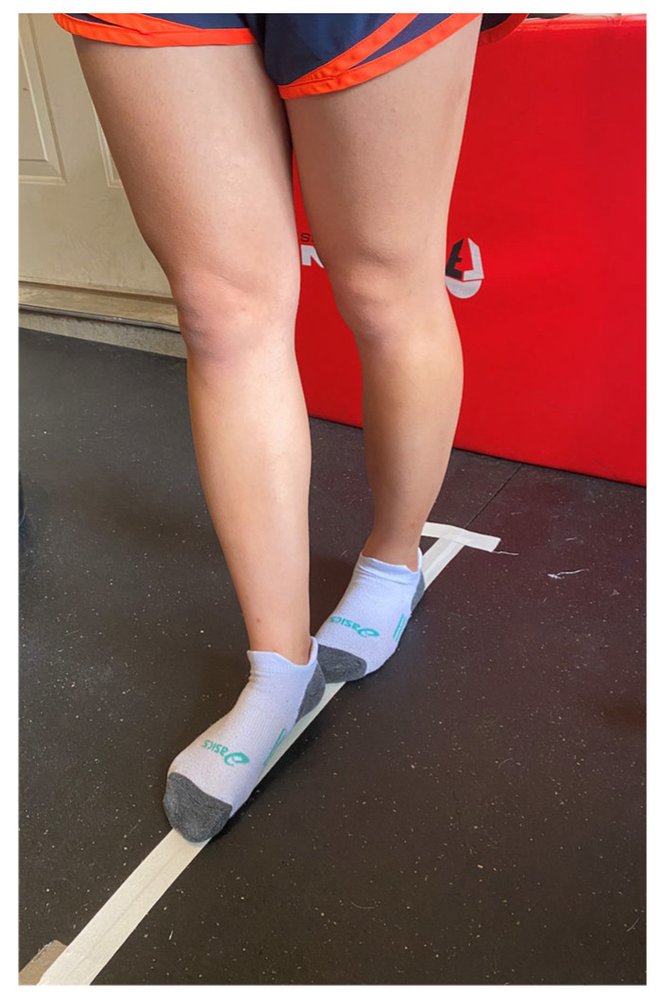
Picture
Ask or do
Watch them walk: posture, balance, arm swing, stride, turning
Ask them to walk heel to toe along a straight line (tandem gait)
Stand close by
Listen or look for
Cannot keep the line, steps off or sways · reduced arm swing, small steps and a stooped posture suggest Parkinson disease
Pearls
Remember
⚠ Ask about falls whenever gait is abnormal: see the history (section 2).
Problem list, plan and presenting
CS2 · Geriatrics
Start here
What the objectives say
Make a preliminary problem list and management plan. No source says how: the Putting It Together summary note has the problem list and differential format used in the course
Present the case to peers and faculty in a clear, concise way using the framework you are given
Reflect on the encounter with the group's feedback, and give peers constructive feedback so that you work well with them
Video credits
There are no videos on this page: a history is a conversation, so the skill is in what you say and what you listen for. Practise the questions out loud. The gait card has one picture, credited below.
Image credits (1)
Images used for non-commercial teaching under their own licences (Creative Commons or public domain; textbook figures from student notes remain their publishers' copyright). Some were cropped to hide faces or handwriting.
Gait: Wahlquist VE, Buckley TA, Caccese JB, Glutting JJ, Royer TD, Kaminski TW, Sports (Basel) 2024, Fig. 4, CC BY 4.0 (resized), source